History
By David Mugisha · Published on March 15, 2026 • 3 min read
If you care about Ugandan history, Hoima deserves a place on your route. Most visitors pass toward parks and lakes, but a short detour leads to Mparo Royal Tombs, one of the most meaningful heritage sites in western Uganda. It is quiet, modest, and deeply powerful.
Why Bunyoro matters in East African history
Bunyoro Kitara is remembered as one of the region's major historical kingdoms, with strong political and trade influence across earlier centuries. Oral traditions, clan records, and regional scholarship point to a long period of statecraft before colonial rule redrew power structures in the Great Lakes region.
"You do not visit Mparo for spectacle. You visit to understand what resistance, leadership, and memory look like on the ground."
The name most travelers encounter first is Omukama Kabalega, one of the best known anti colonial leaders in Uganda. His resistance campaigns against British expansion are central to the story of Bunyoro, and his legacy still shapes public memory, education, and national identity.
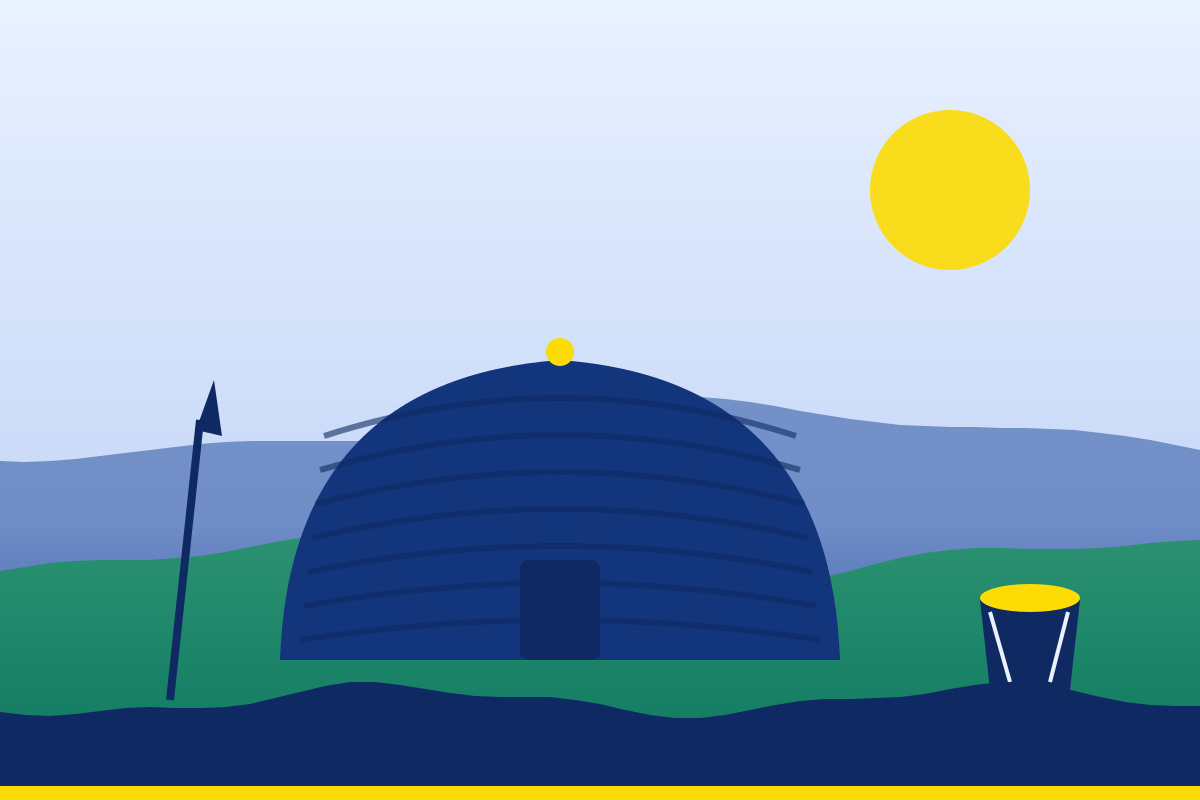
The empire before the kingdom
Long before colonial borders, Bunyoro-Kitara was the gravitational centre of the Great Lakes region. Its rulers traced their authority to the Chwezi dynasties remembered across western Uganda, and its economy ran on assets everyone else wanted: the salt gardens of Kibiro on Lake Albert, iron working, and control of Nile crossings rich with fish. Caravans moved through Bunyoro long before Europeans arrived, and the kingdom taxed, traded, and negotiated from strength.
That strength is why the falls at the heart of today's Murchison Falls National Park carry a second name, Kabalega Falls. The park's savanna was royal hunting ground, and the king's herds and regiments moved through land that guests now cross on game drives. When you stand at the top of the falls you are standing inside Bunyoro's old heartland.
Kabalega's long war
Omukama Kabalega took the throne in 1870 and built something unusual for the era: a standing professional army, the abarusura, tens of thousands strong and organised into named regiments. When the British moved to impose control in 1894, Bunyoro did not fold. Kabalega fought a mobile, five year guerrilla war across swamps and borderlands, longer and harder resistance than almost any other leader in the region managed.
He was finally captured in 1899, wounded in Lango territory alongside Mwanga of Buganda, and exiled to the Seychelles for a quarter of a century. He was allowed to return only in 1923 and died at Mpumudde before reaching his palace. In Uganda he is remembered not as a defeated king but as a national symbol of resistance, honoured across ethnic lines.
What you see at Mparo Royal Tombs
The site is not a polished museum. It feels intimate and lived with memory. Royal burial structures, bark cloth, ceremonial objects, and oral interpretation from local custodians create a direct connection to the past. Guides explain lineage, ritual practice, and the political role of the Omukama across generations.
How to include Mparo in a modern itinerary
Mparo works well as part of a western Uganda circuit, especially for travelers combining wildlife with culture. You can pair Hoima heritage stops with Murchison Falls access routes, community experiences, and regional food visits. It adds context that safari alone cannot provide.
A better way to read Uganda
Nature is one chapter of Uganda. Kingdom history is another. When you put them together, forests, rivers, and roads start to make more sense because you can see who has lived with this landscape, governed it, defended it, and narrated it through time.
Planning a culture and history route? See western route hubs, then get a quote for a culture-focused itinerary.